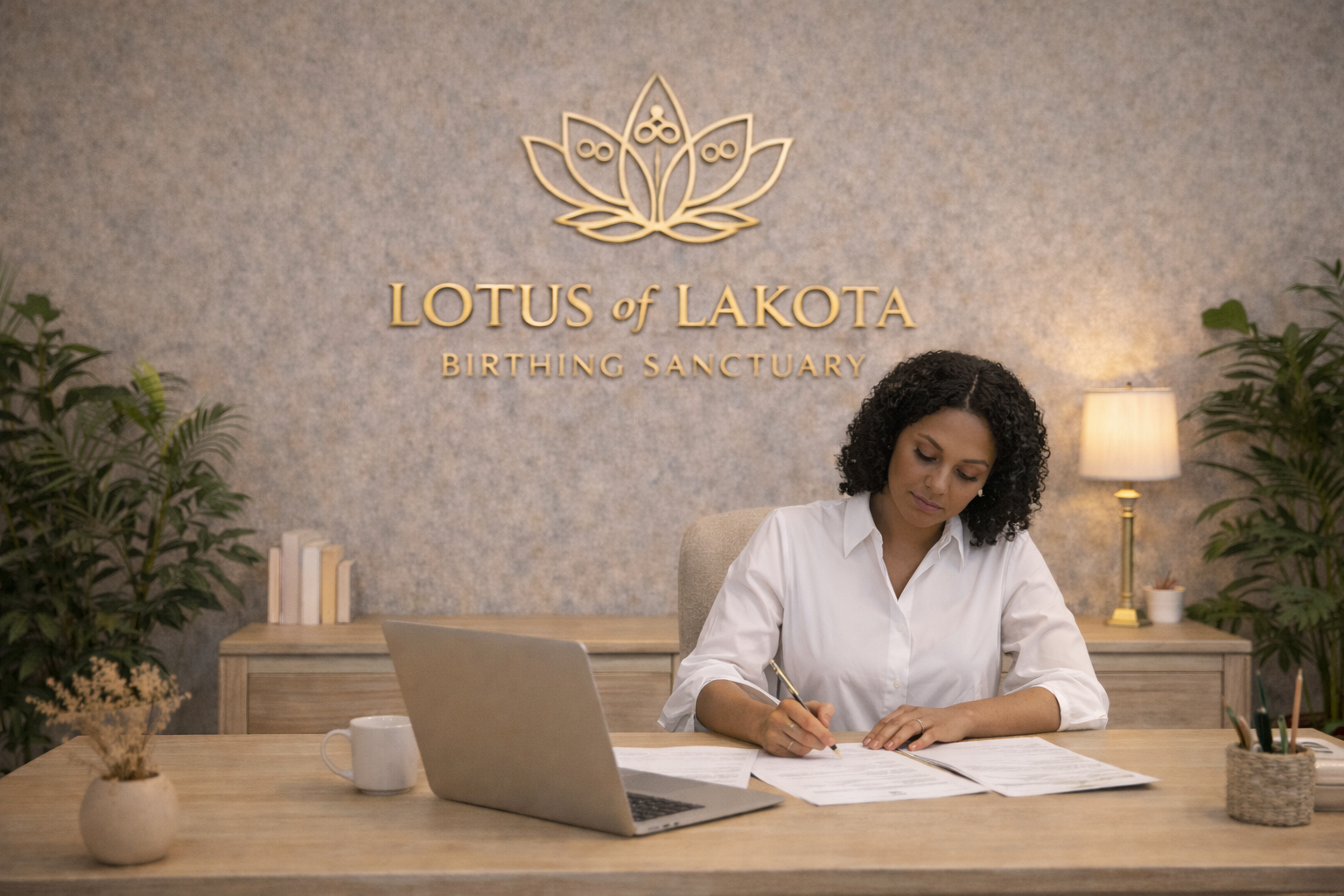
What It Really Takes to Open a Licensed Birth Center in Delaware
Opening a licensed freestanding birth center is not simply about designing beautiful rooms or creating a calming environment. It requires building a fully regulated healthcare facility from the ground up.
In Delaware, a midwife-led birth center must meet strict clinical, operational, and regulatory standards before serving families. The process involves far more planning, documentation, and infrastructure than most people realize.
As the founder of Lotus of Lakota Birthing Sanctuary, I am committed to transparency about what this development process truly entails.
1. Clinical Leadership Is Required
In Delaware, a freestanding birth center must have qualified clinical oversight.
That means securing an experienced Certified Nurse Midwife (CNM) to serve in a leadership role. Clinical policies, standing orders, inclusion and exclusion criteria, medication protocols, emergency procedures, and quality assurance systems must all be developed and reviewed under appropriate clinical direction.
This is not optional.
It is regulatory.
2. Licensing and Regulatory Approval
Before doors can open, a birth center must:
• Secure an appropriate commercial medical facility
• Meet building and safety codes
• Develop detailed policies and procedures
• Establish emergency transfer agreements
• Prepare for inspection and regulatory review
Licensure is earned through preparation, documentation, and compliance — not simply intention.
3. Safety Systems and Quality Assurance
A licensed birth center must maintain:
• Incident reporting protocols
• Medication storage and double-lock systems
• Infection control policies
• Emergency drill documentation
• Chart audits and outcome tracking
Quality Assurance and Performance Improvement programs are required to ensure ongoing safety and accountability.
Birth centers operate within structured healthcare standards.
4. Insurance, Staffing, and Operational Planning
Opening responsibly requires:
• Professional liability coverage
• General business insurance
• Trained clinical and support staff
• Operational policies
• Billing and documentation systems
Healthcare facilities are operational systems — not just physical spaces.
5. Capital Investment
Beyond clinical planning, a birth center requires substantial capital for:
• Building acquisition or long-term lease
• Renovations and inspection readiness
• Medical equipment
• Staffing and first-year payroll
• Licensing and professional services
Opening a birth center responsibly means ensuring financial stability before the first family is served.
Why This Transparency Matters
Lotus of Lakota Birthing Sanctuary is being developed intentionally, legally, and sustainably.
This is not a pop-up concept.
It is a structured healthcare project.
Every policy drafted, every compliance step taken, and every fundraising effort is part of building a safe, licensed environment for families in Southern Delaware.
Opening a birth center is not about aesthetic.
It is about accountability.
And that accountability is what builds trust.
Moving From Vision to Implementation
Transforming a licensed birth center from concept to operational reality requires coordinated planning, clinical leadership, regulatory readiness, and financial preparation. Each phase must be completed before families can be served safely.
If you would like to support this development process, I invite you to follow our progress or contribute to our capital campaign as we work toward securing our facility and preparing for licensure.
Our focus remains steady: building a safe, compliant, and sustainable maternity care environment for Southern Delaware.