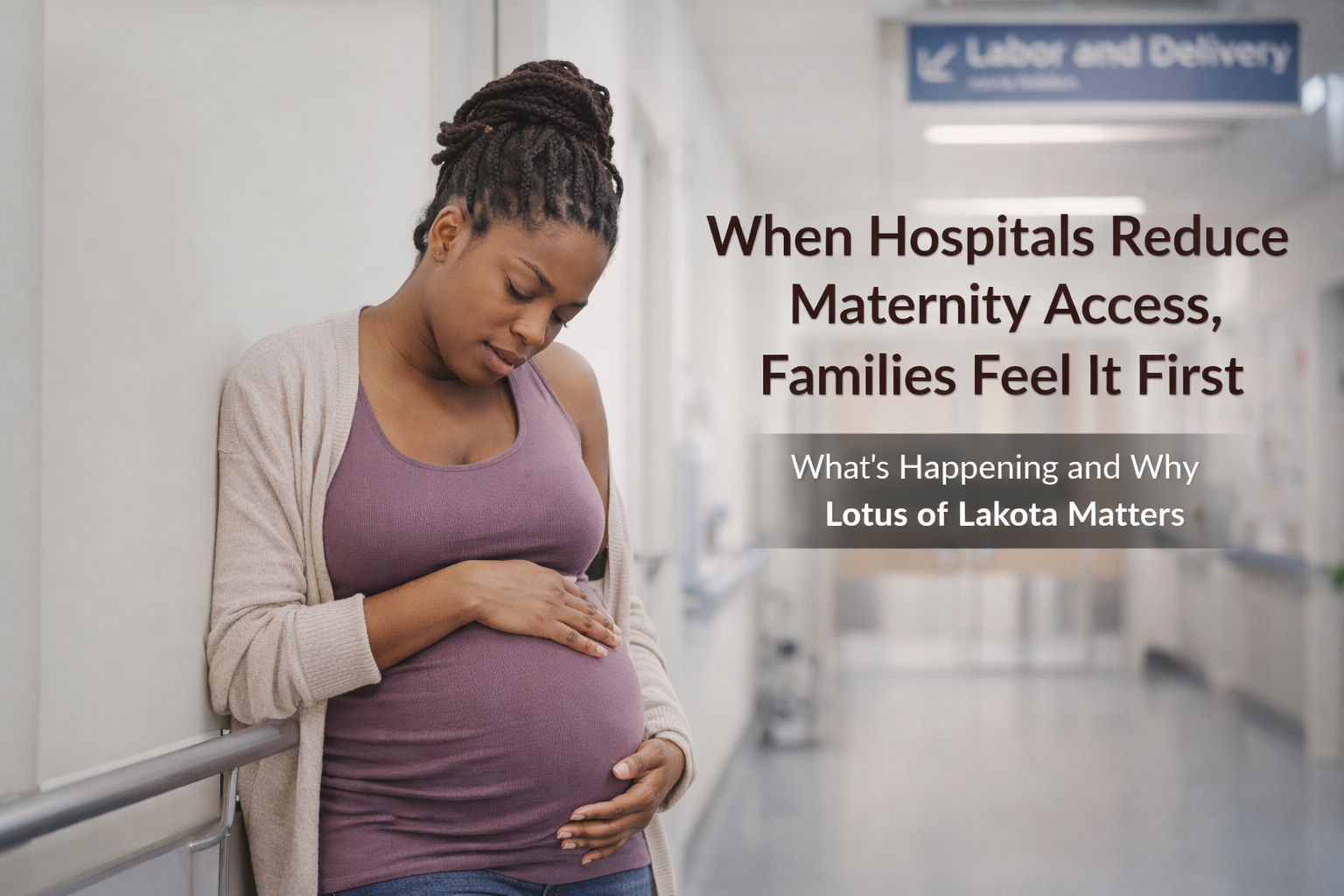
When Access to Birth Changes: What Families Need to Know
A recent public update shared by ChristianaCare Union Hospital announced changes to obstetric and pediatric services at Union Hospital in Cecil County. According to the post, ChristianaCare is limiting obstetric and pediatric services at Union Hospital because of a shortage of specialized physicians. During certain days and hours, patients may be redirected, transferred, or told to seek labor and delivery services at another hospital, including ChristianaCare’s Newark campus.
This information was shared publicly by ChristianaCare Union Hospital in a recent announcement regarding changes to obstetric services.
For expecting families, this is not a small change.
Access to safe, consistent maternity care should never feel uncertain.
It means that women who are pregnant may now face more uncertainty about where they can deliver, when services will be available, and what will happen if they go into labor outside of the hospital’s limited-service hours.
What This Means for Families
When a hospital reduces maternity access, the burden does not disappear. It shifts to families.
That can mean:
longer travel times during labor
more confusion about where to go
greater emotional stress during pregnancy
increased pressure on other hospitals and care teams
For a woman in labor, uncertainty is not just inconvenient. It can be frightening.
This Is Bigger Than One Hospital
What ChristianaCare Union Hospital shared publicly reflects a larger issue in maternal healthcare: families are depending on systems that are stretched thin.
When hospitals reduce obstetric services because of staffing shortages, it reveals how fragile maternity access can become, especially in communities that already have limited birth options.
This is exactly why birth infrastructure matters.
Why Alternative Birth Settings Matter
Hospitals are essential. They provide emergency care, surgery, NICU services, and high-risk obstetric care.
But hospitals should not be the only option available to families.
For low-risk pregnancies, freestanding birth centers can provide another safe, regulated, and relationship-based model of care. They give families access to:
consistent prenatal and birth support
a lower-intervention setting
a known care team
clear transfer protocols when higher-level care is needed
Birth centers are not a replacement for hospitals. They are part of a stronger maternal health system.
Why Lotus of Lakota Matters
At Lotus of Lakota Birthing Sanctuary, the vision is to help close these gaps by creating a freestanding, midwife-led birth center rooted in safety, dignity, continuity, and culturally responsive care.
When hospital systems change or reduce access, families should not be left with fewer choices and more fear.
They should have options.
That is why Lotus of Lakota is being built.
Moving Forward
The public announcement from ChristianaCare Union Hospital should be a reminder to all of us: maternity care access is not something we can assume will always be there in the way families need it.
If we want women and babies to be safe, supported, and heard, then we must build stronger maternal health infrastructure now.
Lotus of Lakota is part of that future.
Support the Vision
If you believe families deserve access to safe, respectful, and culturally responsive maternity care, you can support the development of Lotus of Lakota Birthing Sanctuary.