
Deliver Us: A Birth Center Week Conversation That Stayed With Me
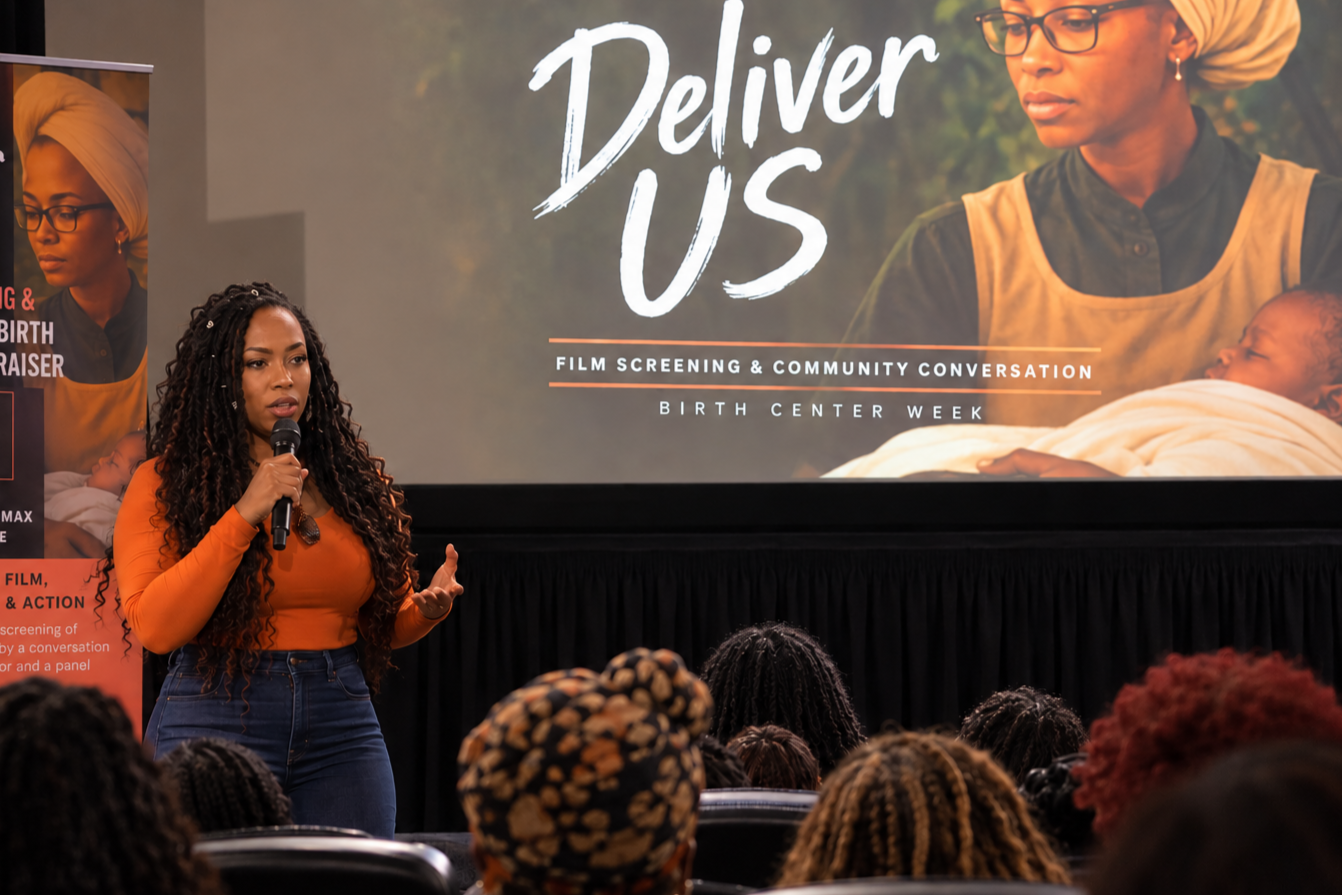
During Birth Center Week, I had the opportunity to serve as moderator for a screening of Deliver Us in Wilmington, Delaware. I knew going into the event that the film would speak to many of the issues that have shaped my own journey into maternal health and birth center development. What I did not expect was how deeply some of the stories would stay with me after the lights came back on.
Deliver Us follows four Black midwives working in Los Angeles, Chicago, and rural Alabama as they build birth centers and care for families while navigating barriers within our healthcare system. Watching their work on the screen felt especially meaningful to me because I am currently building Lotus of Lakota Birthing Sanctuary here in Delaware.
I am still in the development stage. I am learning, building relationships, looking for the right property, navigating regulations, seeking funding, and continuing my own education. There are days when the amount of work ahead feels enormous. Watching these midwives reminded me why the work matters.
More Than a Place to Give Birth
One of the conversations surrounding the film was about the role of the midwife as more than a medical provider. Midwifery can also represent community, advocacy, trust, culture, and relationship. That stayed with me. When I began envisioning Lotus of Lakota, I never wanted to simply recreate a smaller version of a hospital maternity unit. I wanted to create a place where women could feel safe enough to exhale. A place where they are listened to. A place where families have time to ask questions and understand their options. A place where birth is not treated as something that needs to be hurried along simply because a clock is moving. That is why the word sanctuary means so much to me.
We Also Have to Talk About the System
The film does not separate birth outcomes from the systems surrounding birth. That is an important conversation. We can talk about compassionate providers and beautiful birth spaces, but we also have to talk about the policies, financing, insurance systems, regulations, education, and access issues that determine whether community birth centers can survive in the first place. Building a birth center has taught me that very quickly. There is the vision of what you want to create—and then there is the infrastructure required to make that vision real and sustainable. Both matter. And if we want more families to have access to midwifery care and community birth, we have to support the people and organizations building that infrastructure.
Sitting in the Moderator's Chair
Serving as moderator made this experience even more meaningful for me. My role was to help create space for conversation after what we had just witnessed on the screen. I was surrounded by people who care deeply about mothers, babies, midwifery, birth centers, and the future of maternal healthcare. I wasn't standing there as someone who has all the answers. I was standing there as a woman who is learning, building, asking questions, and doing everything I can to help create another option for families in Delaware. And in that moment, I realized something:
Lotus is already part of the conversation.
The doors may not be open yet.
The building may not be ours yet. B
ut the work has already begun.
What Comes Next
Deliver Us left audiences with an important question: What can each of us do—in our personal lives, our professions, or our communities—to support mothers and birth workers?
For me, part of the answer is Lotus of Lakota. It means continuing to learn. Continuing to build relationships with midwives, physicians, doulas, lactation professionals, community organizations, and families.
Continuing to advocate for maternal care where women are treated with dignity and where their voices matter. And continuing to build toward a future where families in Delaware have more choices about where and how they give birth. I left the screening encouraged, but also reminded of the responsibility that comes with this work. Birth centers are not simply buildings. They are part of a larger movement toward changing what maternal care can look and feel like.
And Lotus of Lakota intends to be part of that change.
Where women are safe.
Where women are heard.
Where birth is not rushed—but honored.
